




What Is a Commercial Drink Fridge and Where Is It Most Useful in Foodservice Operations?
A busy service counter often runs into the same problem: drinks need to stay cold, easy to reach, and clearly visible, but the available refrigeration does not always support that. Bottles get mixed with kitchen stock, staff waste time opening the wrong door, and customers cannot quickly see what is available. That is usually the point where many operators start asking what a Commercial Drink Fridge actually does differently from a standard refrigerator.
The short answer is that a Commercial Drink Fridge is built for beverage storage, display, and repeated access in working retail and foodservice environments. It helps keep drinks at serving temperature while supporting faster restocking, cleaner presentation, and smoother customer flow. The more useful question, though, is not just what it is, but where it makes the most sense in day-to-day operations.
Why the wrong beverage storage setup creates daily friction
In many foodservice businesses, beverage storage starts as an afterthought. A restaurant may use part of a prep fridge for canned drinks. A bakery may place bottled water in whichever cabinet still has room. A convenience store may rely on an aging cooler that chills unevenly and makes products hard to organize. None of these choices seem serious at first, but they tend to create small operational problems that repeat all day.
One common issue is slow access. If staff need to search through mixed inventory or open a solid-door refrigerator again and again during rush periods, service becomes less efficient. Another issue is inconsistent display. Drinks sell better when customers can quickly identify available options, especially in self-service or grab-and-go settings. If labels are hidden, shelves are crowded, or cold storage is tucked away in the back, beverage sales opportunities are easier to miss.
There is also the product side. Beverages need steady cooling, organized arrangement, and a layout that allows rotation. When drinks are stored in equipment designed mainly for ingredients or back-of-house holding, the result can be poor visibility, uneven loading, and more frequent door opening than the system was really intended to handle. Over time, that affects workflow and presentation even if the unit is technically still running.
What a Commercial Drink Fridge actually is
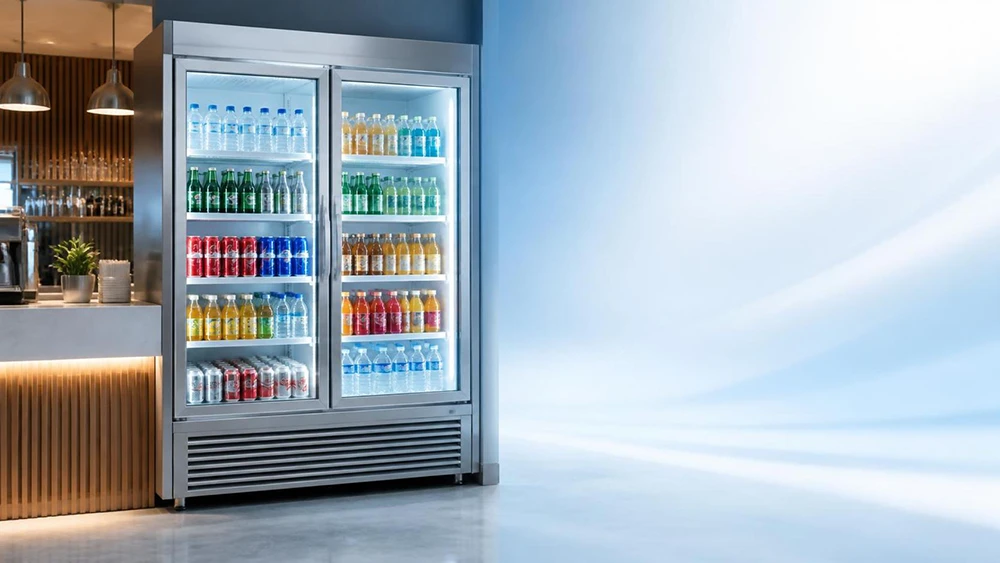
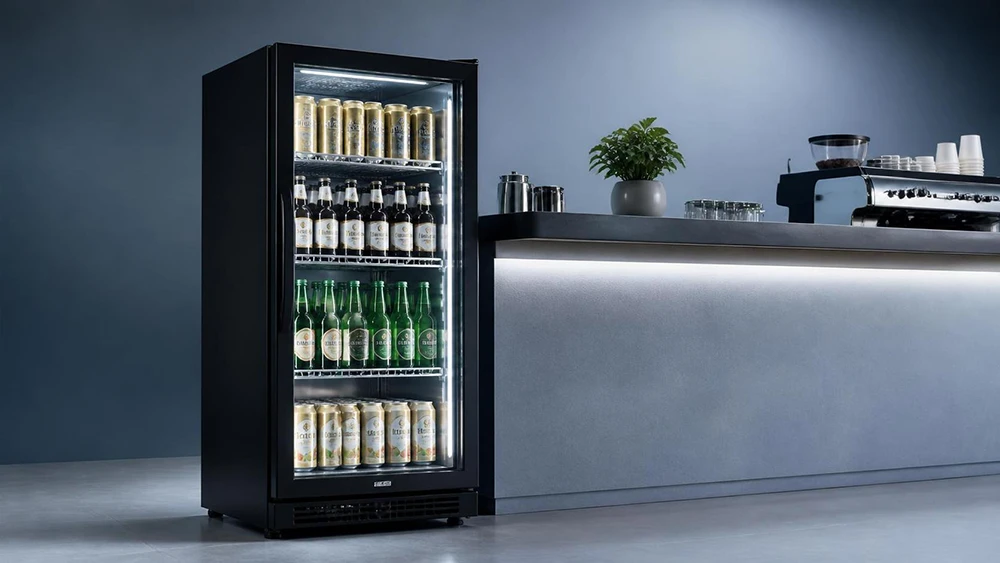
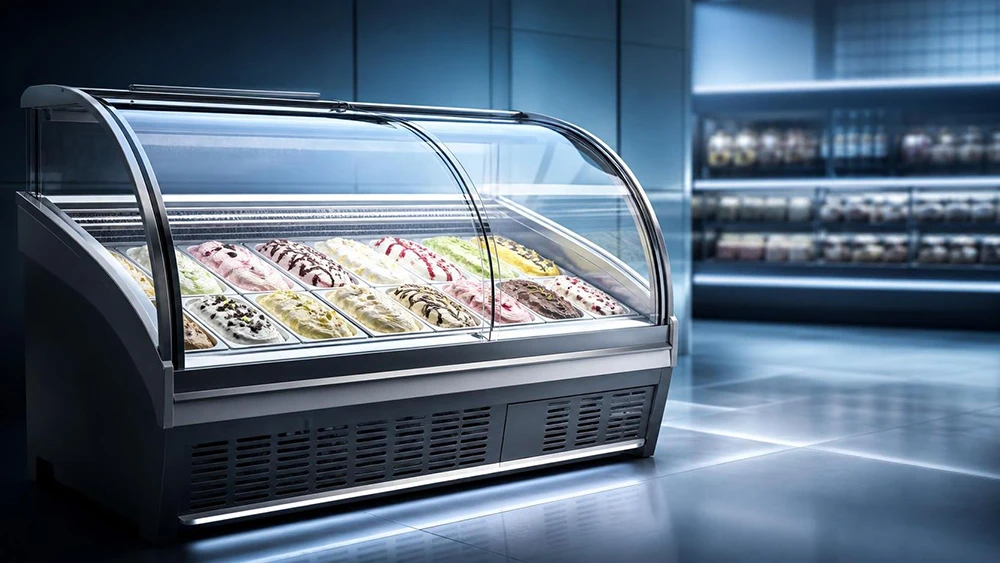
A Commercial Drink Fridge is refrigerated equipment designed specifically for storing and displaying beverages in a commercial environment. Depending on the setup, it may have glass doors for product visibility, adjustable shelving for different bottle or can sizes, interior lighting, and a layout that makes drinks easy to load and retrieve. Its role is not just cooling. It also supports merchandising, stock organization, and repeated access during business hours.
This is the main difference between a dedicated drink fridge and a general refrigerator. A general refrigerator focuses on broad cold storage. A Commercial Drink Fridge is usually chosen because drinks are a visible product category, not just something kept cold in the background. In practical terms, that means the unit is expected to help with both preservation and presentation.
That distinction matters most in foodservice operations where beverages are purchased frequently, restocked often, and accessed by either staff or customers throughout the day.
Where a Commercial Drink Fridge is most useful
The most useful locations are the ones where beverage visibility, quick access, and organized storage directly affect service. Not every business needs the same type of unit, but several operating scenarios come up repeatedly.
Restaurants with front-counter beverage service
In restaurants, especially quick-service or casual formats, drinks often move fast during peak periods. If bottled beverages, canned soft drinks, juice, or specialty cold drinks are part of the order flow, a drink fridge near the service area reduces unnecessary back-and-forth. Staff can pick items faster, and customers can often see choices without asking. This is particularly useful when drinks are an add-on item rather than the main product.
Bakeries and cafes with grab-and-go sales
Bakeries and cafes often rely on visual purchasing. Customers come in for bread, pastries, or coffee, then decide at the counter whether to add a cold beverage. A Commercial Drink Fridge works well here because it supports impulse-friendly display. It also keeps bottled drinks separate from dairy, ingredients, and kitchen items, which helps maintain cleaner organization behind the scenes.
Convenience stores and small retail food shops
This is one of the clearest use cases. In a convenience setting, customers expect to spot drinks quickly, compare options at a glance, and grab what they want without delay. A dedicated beverage fridge supports exactly that behavior. It is not only about temperature control; it is about visibility, shelf arrangement, and stock presentation that matches the pace of short, frequent visits.
Supermarkets and specialty food sections
In supermarkets, drink fridges are useful in beverage aisles, checkout-adjacent zones, deli sections, bakery corners, or prepared food areas. They help separate chilled ready-to-drink items from broader cold storage. That makes category management simpler and gives customers a more direct path to beverage purchases. Placement matters here: the fridge is often most effective where meal pairing or convenience buying naturally happens.
Seafood, meat, and fresh market environments
In markets focused on fresh product, drinks may not be the core category, but they still need a tidy and reliable place. A separate Commercial Drink Fridge helps avoid mixing beverages with main refrigerated goods, keeps front-of-shop presentation cleaner, and gives waiting customers an easy add-on purchase option. This is especially useful where cold drinks are part of the customer experience but not the main inventory priority.
Common misunderstandings before choosing one
A frequent mistake is assuming that any refrigerator can handle beverage sales equally well. Technically, many refrigerators can cool drinks. The problem is that cooling alone does not solve the operational needs around access, display, shelf layout, and repeated opening during business hours.
Another misunderstanding is thinking bigger is always better. Some operators choose a large unit because they want flexibility, then realize it occupies valuable floor area and encourages mixed storage. If a fridge becomes a catch-all cabinet for anything cold, beverage organization often gets worse rather than better.
There is also a tendency to focus only on appearance. A glass-door unit may look appropriate for front-of-house use, but the real decision should include product mix, traffic level, placement, stock rotation habits, and whether customers or staff will be the main users. A drink fridge should match the actual workflow, not just the layout drawing.
How to decide whether you need a Commercial Drink Fridge
If you are comparing options, it helps to work through a simple set of questions instead of starting with model size or exterior style.
- Are beverages a visible part of the sale? If customers need to see drinks to choose them, a dedicated beverage display unit is usually more useful than hidden back-of-house refrigeration.
- How often are drinks accessed during service? High-frequency opening favors a setup designed for repeated commercial use and easy shelf retrieval.
- Will the fridge be used by staff, customers, or both? This affects door style, placement, and how products should be arranged.
- Do drinks need separate storage from ingredients or fresh foods? If mixed storage is already causing clutter or confusion, separation alone may justify the change.
- Is floor space limited? In small shops or compact service lines, dimensions and door clearance matter as much as capacity.
- What kinds of beverage packaging will be stored? Cans, bottles, cartons, and specialty containers all require shelf flexibility.
When these questions are answered honestly, the need usually becomes clearer. In some businesses, a standard refrigerator is enough. In others, a Commercial Drink Fridge is not an upgrade for appearance; it is a practical fix for a recurring operating problem.
What to look for in a unit for foodservice use
Once the decision is leaning toward a dedicated beverage fridge, the next step is to evaluate features that affect real use. The best choice is usually the one that matches service rhythm and product type, not the one with the longest feature list.
Storage and shelf flexibility
Different beverage formats require different shelf spacing. Adjustable shelves are useful when the product mix changes between bottled juices, canned soft drinks, sparkling water, or packaged dairy drinks. If shelf positions are too fixed, the fridge may look organized at installation and frustrating a week later.
Door style and visibility
Glass doors are useful in customer-facing spaces because they allow quick viewing without repeated opening. In staff-only areas, the same visibility can still help with speed and restocking. The point is not decoration. It is reducing hesitation and helping people locate items quickly.
Internal organization
A good beverage setup should make stock rotation simple. Drinks should be easy to arrange by category, brand, size, or sales priority. If the interior makes that difficult, the fridge may stay cold but still fail as a working storage tool.
Fit within the operation
Placement should be considered early. A unit may have suitable capacity but still be awkward if its door swing blocks the counter path, if it is too far from the point of sale, or if it makes restocking difficult during open hours. The most useful fridge is the one that works with daily movement patterns.
A practical selection path for operators comparing options
Many buyers get stuck between display needs, kitchen workflow, and available space. A simple decision path helps.
- Start from the use area. Decide whether the unit belongs in front-of-house, self-service retail, or a staff-only service station.
- List your beverage categories. Separate fast-moving drinks from occasional stock so shelf needs are easier to estimate.
- Measure access space, not just floor space. Door opening, loading space, and walking clearance matter.
- Think about who restocks it. If restocking happens during service hours, the interior should support quick, low-confusion organization.
- Choose a supplier that understands commercial refrigeration use cases. When operators need different formats, custom dimensions, or product-specific adjustments, working with a manufacturer familiar with refrigeration kitchen equipment can make the decision process more straightforward.
For businesses that need more tailored commercial refrigeration planning, some manufacturers support broader equipment coordination rather than only selling a single standard cabinet. Baisite, for example, works in commercial refrigeration kitchen equipment manufacturing and also handles OEM and ODM customization, sheet metal processing, complete machine production, and related export support. That kind of background can be relevant when an operator is not just choosing one fridge, but trying to match beverage refrigeration with the overall working environment.
How to avoid buying the right fridge for the wrong purpose
One useful check is to look at the unit through the lens of behavior. Ask what people will actually do with it during a normal day. Will customers open it themselves? Will staff pull drinks every few minutes? Will it be restocked in small batches throughout service? Will it need to hold only packaged beverages, or will it slowly become overflow storage for unrelated products?
If the answers are vague, the equipment choice is more likely to drift off course. That is why defining the purpose matters before comparing specifications. A Commercial Drink Fridge works best when it is used as a beverage-focused station with a clear role in the operation.
It also helps to decide who is responsible for stock order, cleaning, and product rotation. Even a suitable fridge becomes messy if no one manages facings, empty slots, and category separation. In practice, beverage refrigeration performs best when equipment choice and handling habits are aligned from the start.
Frequently Asked Questions
Is a Commercial Drink Fridge different from a normal refrigerator?
Yes. A normal refrigerator can cool beverages, but a Commercial Drink Fridge is usually designed for easier display, faster access, and better organization in business settings where drinks are sold or retrieved frequently.
Does every restaurant need a Commercial Drink Fridge?
No. It depends on how beverages are stored, sold, and accessed. If drinks are a small part of the operation and stay in back-of-house inventory, a separate unit may not be necessary. If drinks are visible, fast-moving, or part of counter service, it is often more useful.
Where should a drink fridge be placed in a foodservice operation?
The best location is usually where beverage access supports service without disrupting traffic. That may be near a front counter, within a grab-and-go zone, beside a bakery display, or in a retail section where customers naturally look for cold drinks.
Can a Commercial Drink Fridge be used in bakeries and convenience stores?
Yes. Those are two of the most common applications because both environments benefit from visible beverage display, quick retrieval, and clear product separation from other chilled items.
What should I check before choosing one?
Check the intended location, beverage formats, access frequency, shelf flexibility, available space, and whether the fridge will be customer-facing or staff-only. Those points usually matter more than appearance alone.
Final thought
A Commercial Drink Fridge is most useful when beverage handling is already creating friction, whether that means poor visibility, slow service, cluttered cold storage, or missed grab-and-go sales. It is not just a colder box for drinks. It is a way to make beverage storage easier to manage in the places where people actually choose, retrieve, and restock products throughout the day.
If you are reviewing your setup, start with the daily task flow rather than the equipment catalog. Once you know where drinks are causing delay, confusion, or weak display, it becomes much easier to judge whether a dedicated Commercial Drink Fridge is the right fit and what kind of unit will serve the operation well.